
Cornerstoneगुरुकुल
Book a visit
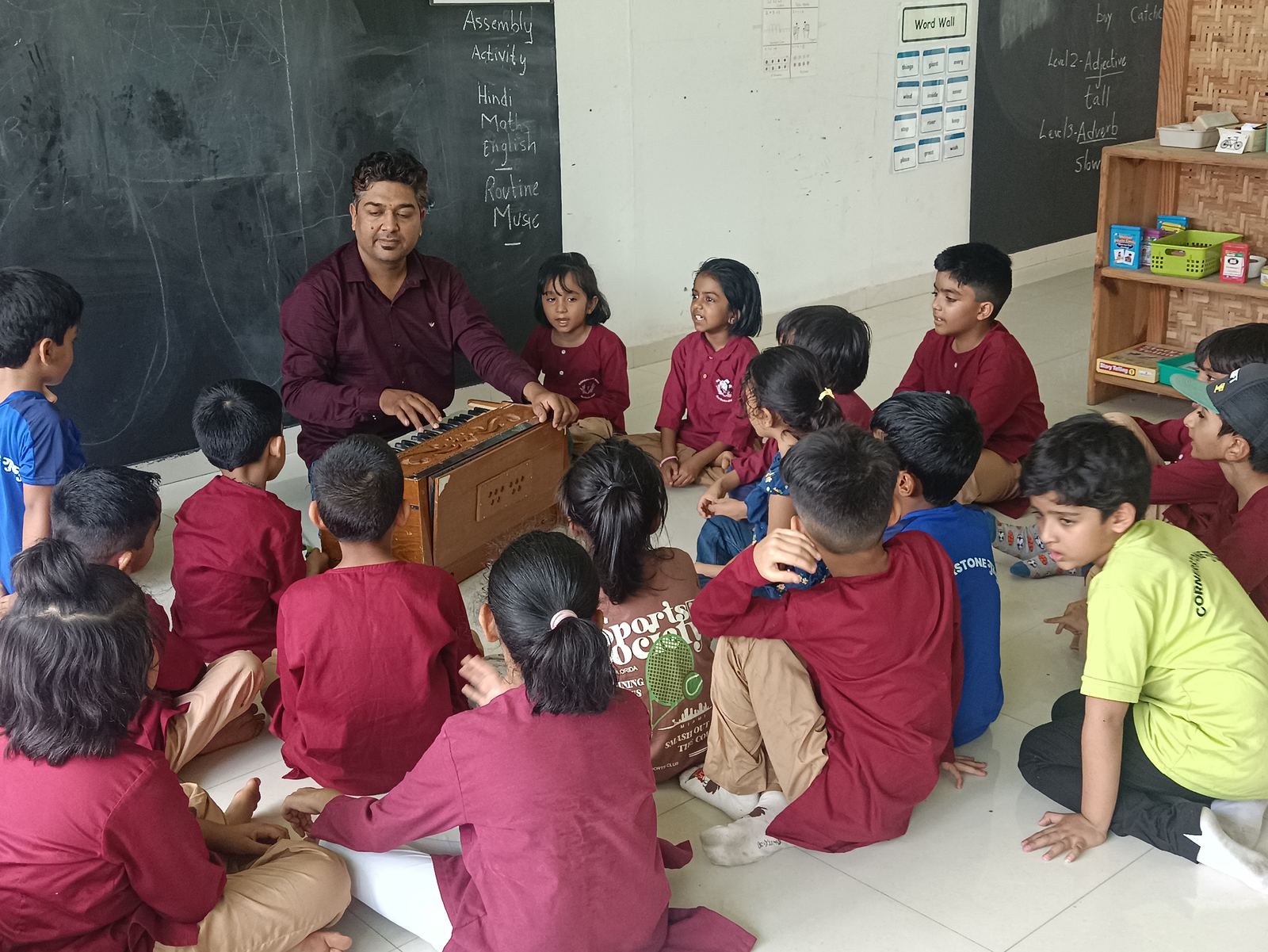
A teacher plays the harmonium for a circle of children seated on the floor

The third cornerstone

Teachers

Who will teach my child?

Learn from teachers who learn, unlearn, relearn.

Children learn most from the adults around them, so those adults keep learning too.

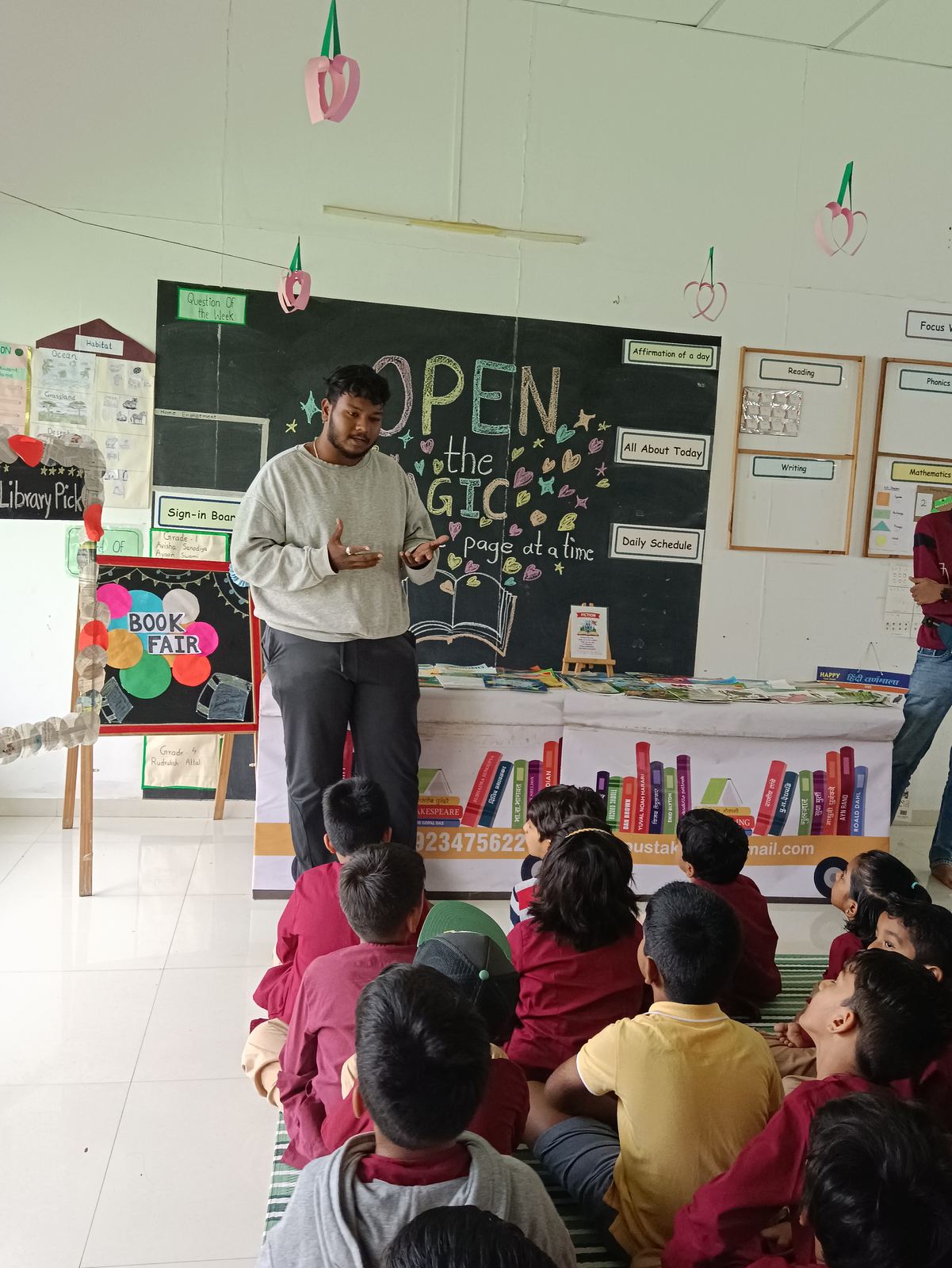
A teacher reads to children seated on the floor
Story time
  1. 01A love for children

    At home on the floor with a six-year-old. We look for this first.

  2. 02Sharp minds, many paths

    Some come from research, some from engineering. Not only education degrees.

  3. 03Still learning

    Happy to say “I don’t know, let’s find out.”

Different roads to the same classroom

Names and photographs go up when each teacher says yes.

Meet our founding educators

Founding educators

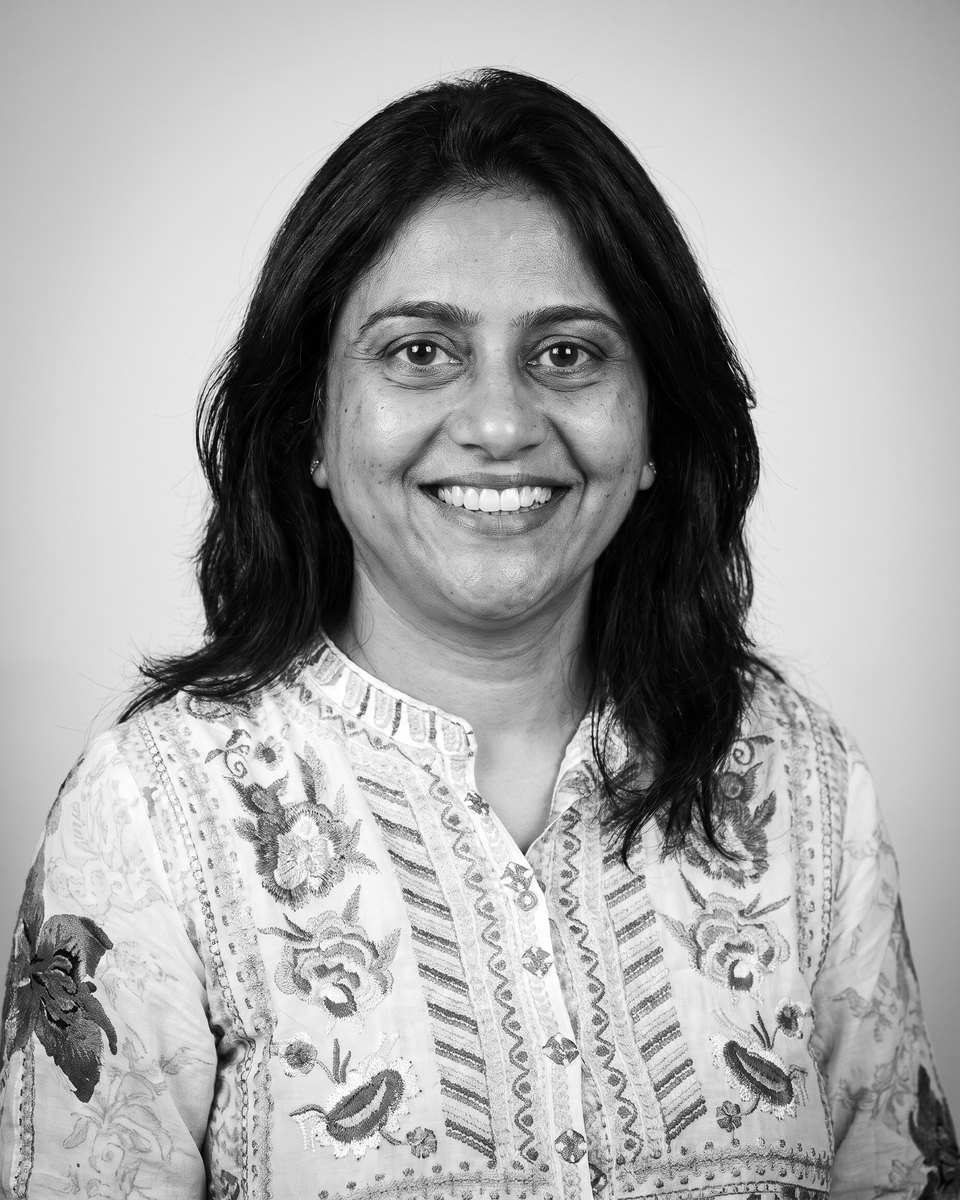
Maya Balaji, pedagogical coordinator

Maya Balaji

Founding educator

Pedagogical coordinator. Leads pedagogy at the school.

  • A postgraduate in genetics, and a research scholar.
  • A Montessori trainer, with a diploma in child psychology.
  • A certified Jolly Phonics trainer.
  • Has taught since she was young: her siblings, her friends, and children preparing for the NEET exam.
“What I love about each day at Cornerstone is that the children come up with lots of different questions, and that keeps me motivated.”
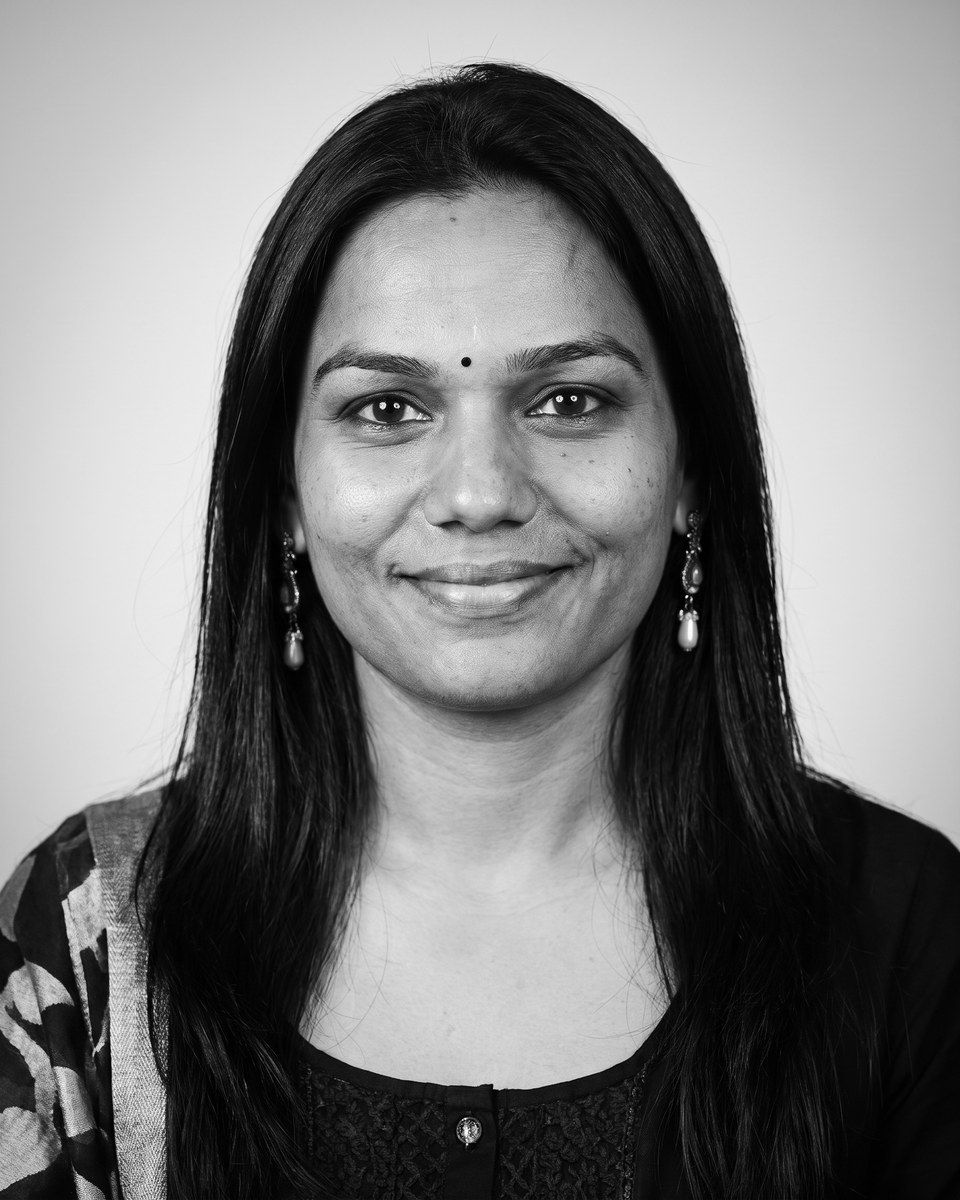
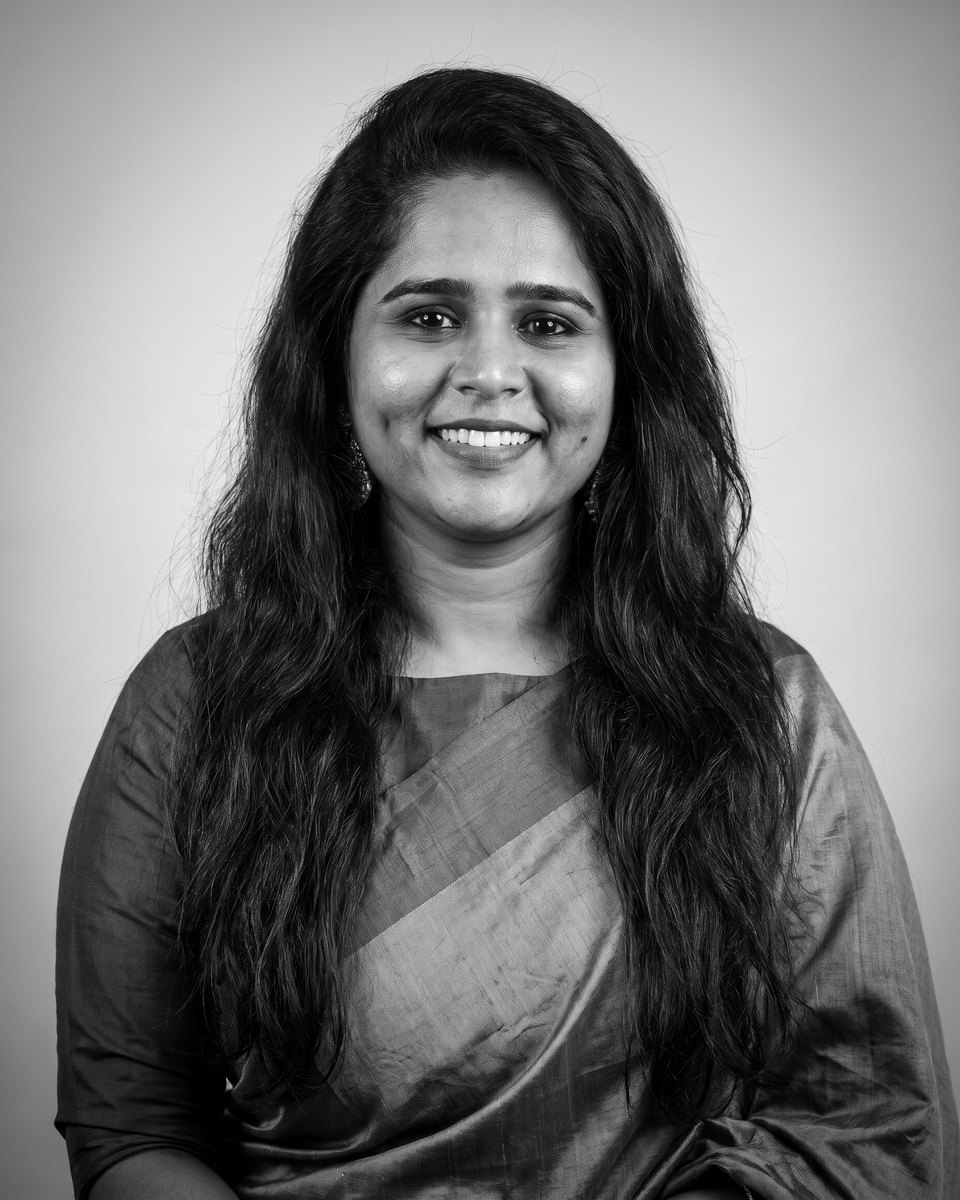
Radhika Khemani, early childhood educator

Radhika Khemani

Founding educator

Early childhood educator. Works with our K1 children and helps get classrooms ready at Gurukul and Neev.

  • Sixteen years in early childhood education.
  • Founded and ran her own preschool for nearly three years.
  • Was a preschool coordinator for three years, and a class leader and coordinator for six years before that.
  • In her fourth year at Cornerstone. Studied commerce (B.Com).

How a teacher grows

Six steps, and we look after the teacher too.

Happy, growing teachers raise happy, growing children.

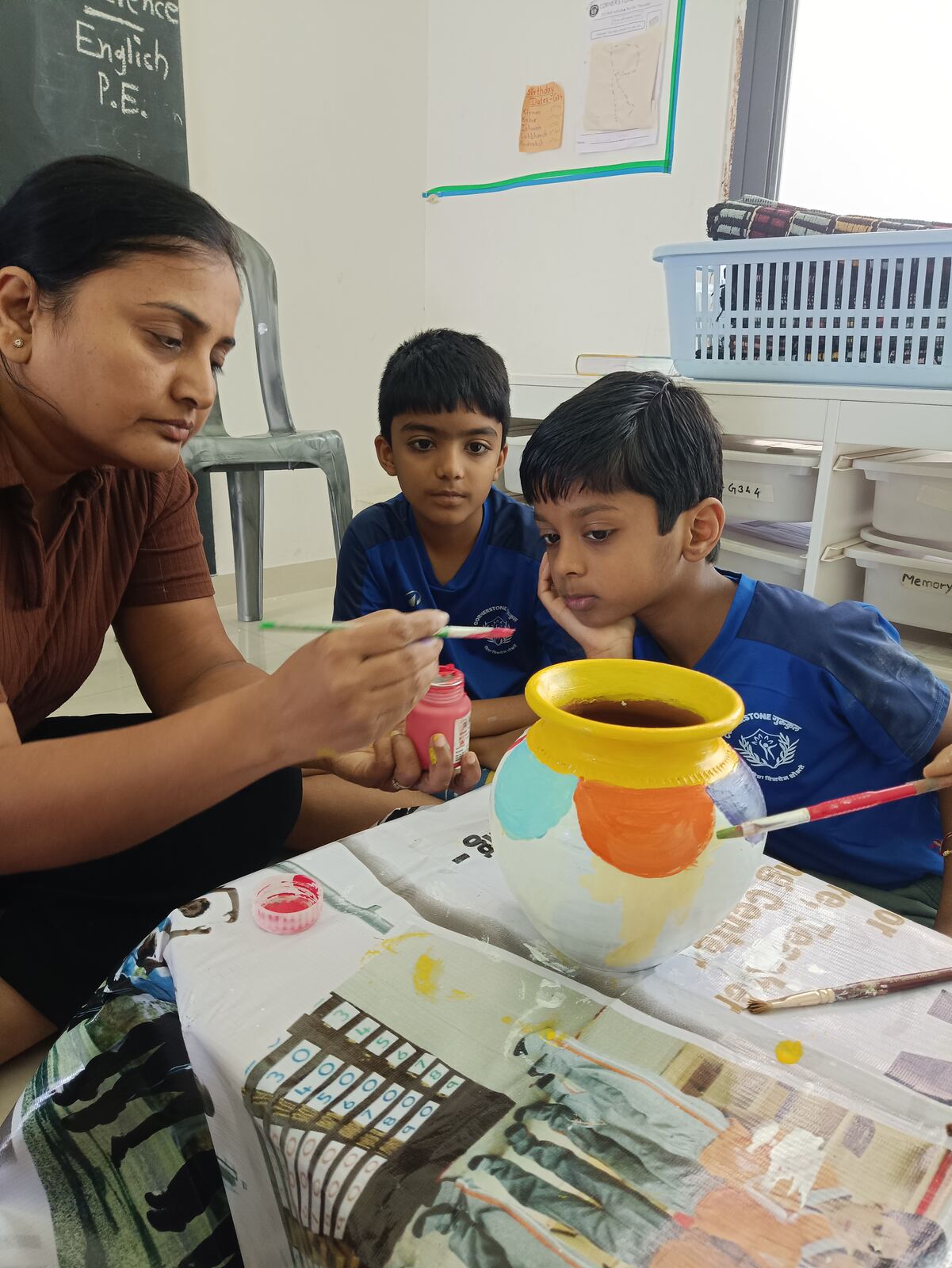
A teacher paints a pot with two boys
Painting a pot
  1. A demo lesson with real children, and a test in their own subject.

    • We look first at how a person is with a six-year-old on the floor. Degrees come second.
    • We listen for “I don’t know, let’s find out.” Someone who can say it will keep growing.
    • Before joining, every new teacher reads what we believe about children. Joining is a yes to that, not only to a job.
  2. Before term and again mid-year. Child first, and notes that describe, never judge.

    • Training covers what we believe, how to watch and note a child, how a day runs, and the curriculum for their age group. The academic lead runs it.
    • It is built for the role. A Nursery teacher starts with circle time. Montessori materials come a few months later, once the routine is steady.
    • A trainer watches the teacher do it with the material, and checks it off, instead of setting a written test. Before the year starts, teachers sit readiness checks in phonics, Hindi, maths and more.
    • About two months of watching and shadowing before a new teacher runs a class alone.
  3. Someone sits in class every two weeks, and there is a deep-work Saturday each month.

    • Every teacher has a one-to-one with the academic lead each month. It opens with what went well, names one thing to grow, and ends on what went well.
    • Coordinators meet their own teachers every week.
    • Weekly lesson plans go in each Friday, so the next week is planned by the people who will teach it.
  4. A quiet room of their own, and time kept free to plan and think.

    • Everyone who works here is treated with the same respect, from the founders to the kakas and didis who keep the school running. Staff eat together.
    • Nobody here works far from the children, and that includes the founders.
  5. Judged on one thing: how much the children in front of them grow.

    • Each role has two or three outcomes to reach, and a teacher chooses their own path to them. We do not hand out a checklist of tasks.
    • The test for any decision is whether it is good for the child. Being on time and being child-first are never traded away for a strong subject.
  6. Stage lead, subject lead, mentor. They help write the curriculum they teach.

    • The founders set the goals for each fortnight. Teachers turn them into daily plans, with the hook, the game and the material for each day.
    • A teacher who shows they can do it moves up to lead a stage or a subject, or to mentor newer teachers.
    • We expect teachers to learn, unlearn and relearn. The school grows as they do.

Kabir, as Baba and Kaka shared it with their teachers

The potter and the pot

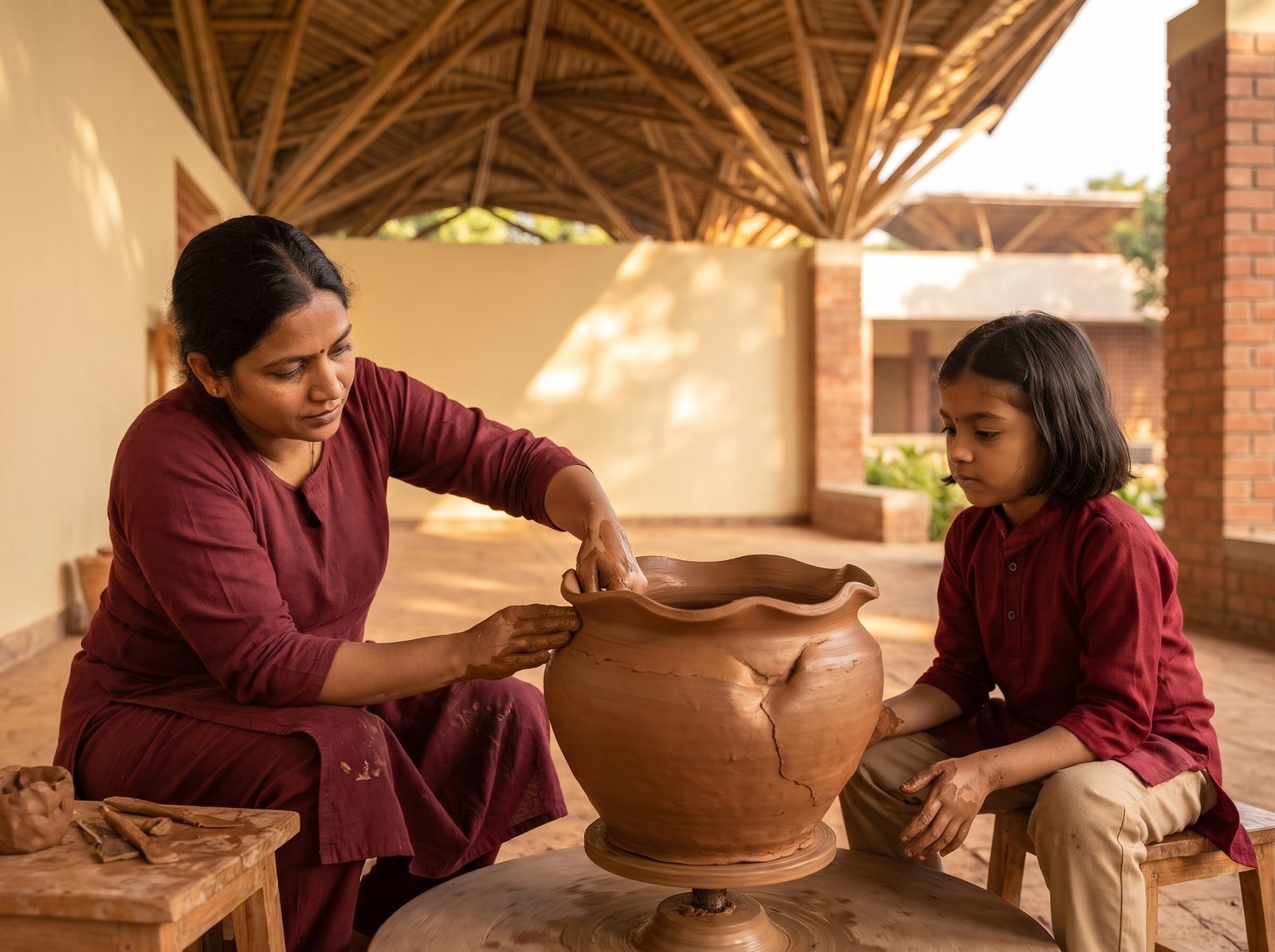
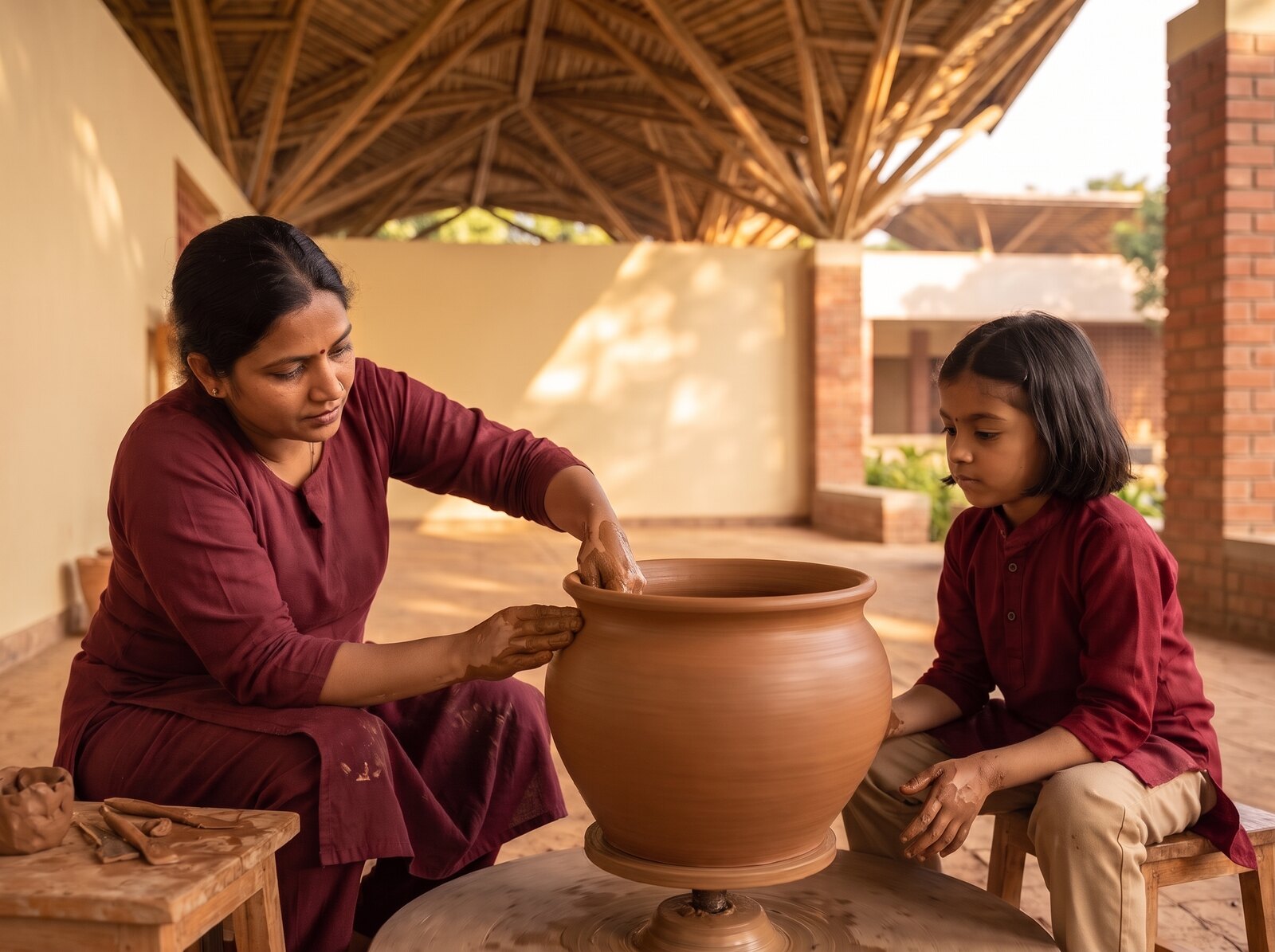
“The teacher is a potter and the child a pot, shaped again and again to take out its flaws. One hand supports it from inside while the other taps it into shape from outside.”

A visualisation of a teacher and a child at the wheel

The pot has a few flaws.

A parent’s view

“I was more focused on the school who would connect with my child.”

Mrunmayee and Agastya’s parent · Sr KG and Playgroup

A parent’s view

“Their approachability and kindness, combined with their willingness to actively seek and adapt to feedback, truly set Cornerstone apart.”

Heian and Viaan’s parents

In school every day

The Founders

  • “No matter at whatever stage you are in the school, in the hierarchy, you cannot disconnect from the children.”
    Nimish Shah, co-founderNimish ShahCo-founder · Systems, technology and brandIIM Kozhikode · Deutsche Bank · Uber · Swvl
  • “We hire for how a person is with a six-year-old on the floor first. The degrees come second.”
    Akanksha Rawat, co-founderAkanksha RawatCo-founder · Academic leadPhysics, St Stephen’s · Deutsche Bank · INSEAD
  • “Baba and Kaka were never once late, even when they were unwell. They taught 300 children at a time without a microphone, then stayed back to clear doubts. We took our standard from them.”
    Aseem Khare, co-founderAseem KhareCo-founder · Business and sustainabilityIIT Bombay · Khare Institute · Khare App

Teach with us

Meet themCome and Visit

Book a visit